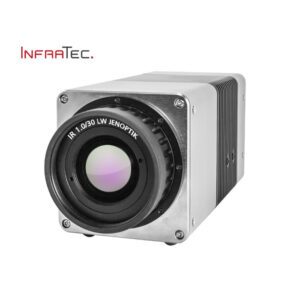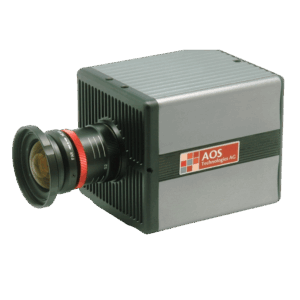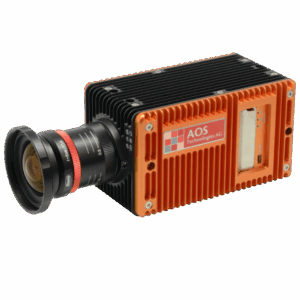
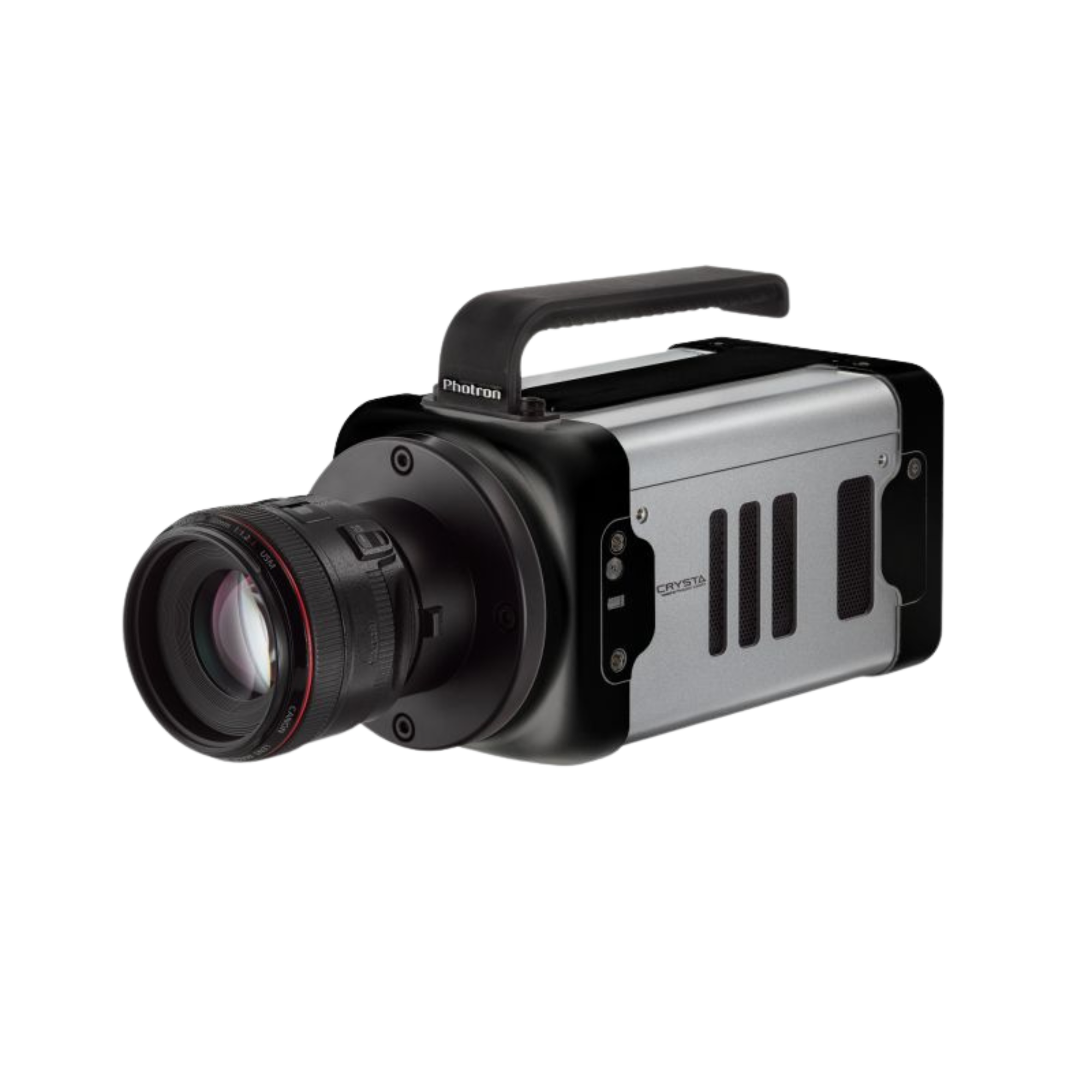
The Photron Crysta is a high-speed polarization camera for the two-dimensional analysis of birefringence measurements, film thickness analysis, and surface roughness inspection, and is a powerful tool to understand phenomena such as birefringence, retardation, stress and impact fracture mechanisms of materials and fluids.
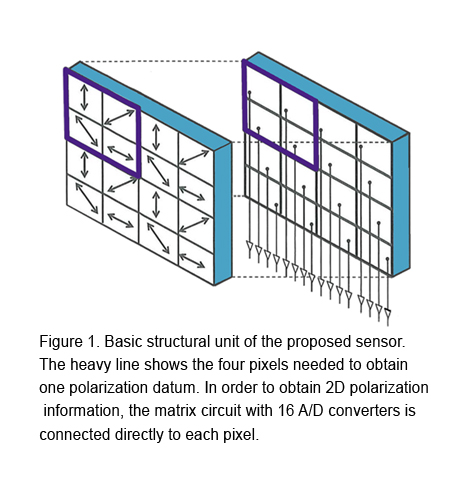
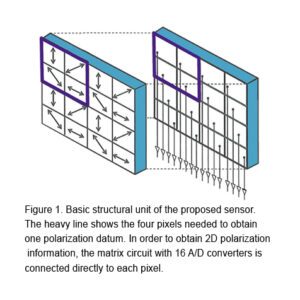
Currently established systems employ mechanical or electrical drives as polarization modulators, they require several photo-detection processes to measure polarization. In order to overcome this problem, The Crysta utilizes a high-speed 2D birefringence measurement system with a sampling rate of 1.3 MHz as the core device of the system with 16 parallel read out circuits in a matrix in the image sensor, which are connected to each pixel with individual A/D converters.
The image sensors design and fabrication incorporates a pixelated polarizer array which is made from photonic crystal bonded directly to the CMOS sensor, making the optical system in this sensor resistant to vibration. Each polarizer corresponds to each pixel of the image sensor with a one to one ratio. The size of each polarizer and pixel is 20 µm x 20 µm. In the polarizer array, groups of four neighboring polarizers (2 x 2) are set to have differing fast axis orientation at 0°, 45°, 90° and 135° in a clockwise arrangement. One polarization datum can be obtained by calculating detected light intensities from the four pixels of the image sensor. Consequently, the parallel read out circuit is arranged in a corresponding matrix.
The electric charges that represent the light intensities accumulated from each pixel are quantized by the multi-channel A/D converters and are stored in the memory of the camera. After that, we apply a phase shift analysis process to the stored data to obtain time-serial images of birefringent phase difference.
*Product Restrictions may apply